Rue Sainte-Cécile
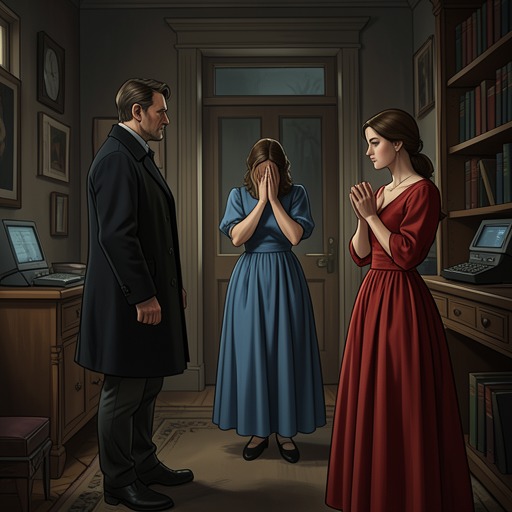
The King in YellowRue Sainte-Cécile is the Paris street associated with the house that gathers Alec, Boris Yvain, Geneviève, and Jack Scott into a shared world of art, friendship, desire, and experiment. What begins as a quaint, richly furnished domestic setting becomes a haunted emotional and physical threshold: the house preserves the memory of the dead, turns ordinary objects into signs of impossible change, and finally reveals Geneviève alive where Alec believed her marble body lay.
Setting and Domestic World
Alec is repeatedly drawn to the little hotel or house in Rue Sainte-Cécile while working on the decorations for Geneviève's boudoir. The place is not merely a residence but a collaborative artistic environment. Alec and Boris work hard when inspiration takes them, idle together with Geneviève and Jack Scott, and move freely among curios, hidden sweetmeats, cigars, studios, and private rooms. Their lives are characterized by a mixture of disciplined craft and youthful play, and the house gives that mixture a concrete architectural form.
The most distinctive interior is the bathing-room, built in rose-coloured marble with a tessellated rose-and-grey floor. A sunken square pool occupies its centre, reached by steps and framed by sculptured pillars beneath a frescoed ceiling. A marble Cupid stands at the upper end of the room, while the whole decoration is credited jointly to Boris and Alec. The room embodies the house's union of art and intimacy: sculpture, architecture, bathing, joking conversation, and dangerous material experiment coexist in the same enclosed space.
Art and Scientific Danger
Boris's work in the bathing-room leads directly to one of Rue Sainte-Cécile's most dangerous secrets. While washing clay from his hands, he plays at conversing with the marble Cupid, and Alec customarily supplies the figure's imagined replies. The game is interrupted when Boris remembers that the pool is filled with his solution. The setting's beauty therefore conceals a substance capable of turning playful artistic space into a site of bodily peril.
Boris explains that he wants to observe the solution's effect on a highly organized living body and identifies a large white rabbit as his intended subject. His experiment is not conducted in a distant laboratory; it is brought into the shared household, where artistic creation and scientific ambition press against domestic routines. The rabbit later becomes crucial to the house's uncanny instability, because a live white rabbit is mistaken for or confused with a marble one, suggesting that the boundary between sculpted representation and living matter has been breached.
Illness, Loss, and Abandonment
The house becomes a place of crisis when Geneviève develops a high fever after a sprain. Boris walks restlessly through his studio, troubled that the doctor cannot account for the fever or may be withholding the explanation. The illness transforms the familiar artistic residence into a space of anxious waiting, with the marble rooms and studio now shadowed by the possibility of death.
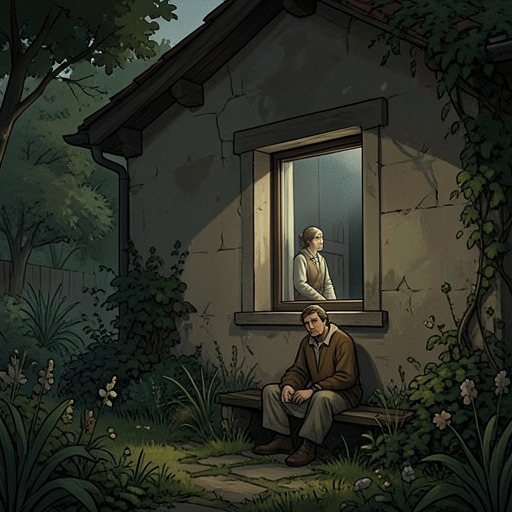
After Geneviève and Boris are lost, Alec enters the house alone. Everything is still in order, but the silence is terrible. He cannot bring himself to enter the marble room where Geneviève had lain, and instead sits before the spinet, where a small lace handkerchief on the keys becomes an unbearable reminder of her presence. Unable to remain, he locks every door, window, and gate, leaves his apartments in the care of Alcide, and departs for Constantinople on the Orient express. The sealed house thus becomes a material expression of grief: its order survives, while the people who gave it meaning have vanished.
Return and Uncanny Transformation
During Alec's two-year absence in the East, the house continues to exert a force over those connected with it. Jack Scott writes that Alec's report of seeing Boris bending over him after Boris's death cannot be explained satisfactorily as a dream or delirium. Jack himself suffers recurring dreams of Alec and Boris, waking with a beating heart and an intensifying sense of breathless expectancy. His anxiety eventually drives him to summon Alec back to Paris.
After returning, Alec gives up his own apartment and moves into the Rue Sainte-Cécile house, which Jack has kept in order with servants. Contrary to his fear, Alec is able to paint there tranquilly, but he continues to avoid the marble room. The room remains the one inaccessible chamber in an otherwise familiar home, concentrating his longing, grief, and fear. His eventual entrance is prepared by a chain of material disturbances: a maid reports that a live white rabbit has been found in the house, goldfish appear where marble fish should be, and the marble Easter lily has become a fresh, fragile flower filled with perfume.
These substitutions force Alec to recognize that the house is no longer governed by ordinary distinctions between statue and organism, memory and presence, or death and life. He rushes into the marble room and finds Geneviève lifting her flushed face from the marble couch and opening her sleepy eyes. The decisive significance of Rue Sainte-Cécile lies in this reversal: the room that preserved Alec's certainty of loss becomes the place where that certainty is undone.
Narrative Significance
Rue Sainte-Cécile functions as a domestic laboratory for the book's unstable reality. Its rooms hold artistic beauty, intimate companionship, scientific experimentation, illness, mourning, dreams, and metamorphosis without separating them into safely distinct spheres. The rose-marble bathing-room gives danger an aesthetic surface; the smoking-room and spinet preserve grief through objects; the locked doors and avoided chamber turn architecture into an instrument of psychological repression; and the marble room finally converts mourning into recognition.
The street's importance is therefore less geographical than structural. It is the fixed address through which the narrative repeatedly crosses from the social world into the uncanny. Alec leaves it to escape the memory of Geneviève and Boris, returns because Jack's dreams make distance impossible, and discovers there that the apparent permanence of marble has been less reliable than the living body hidden beneath it. Rue Sainte-Cécile stands at the centre of that movement from shared artistic life, through death and absence, to an astonishing restoration.